Showing posts with label moto g. Show all posts

Thursday, 22 February 2018

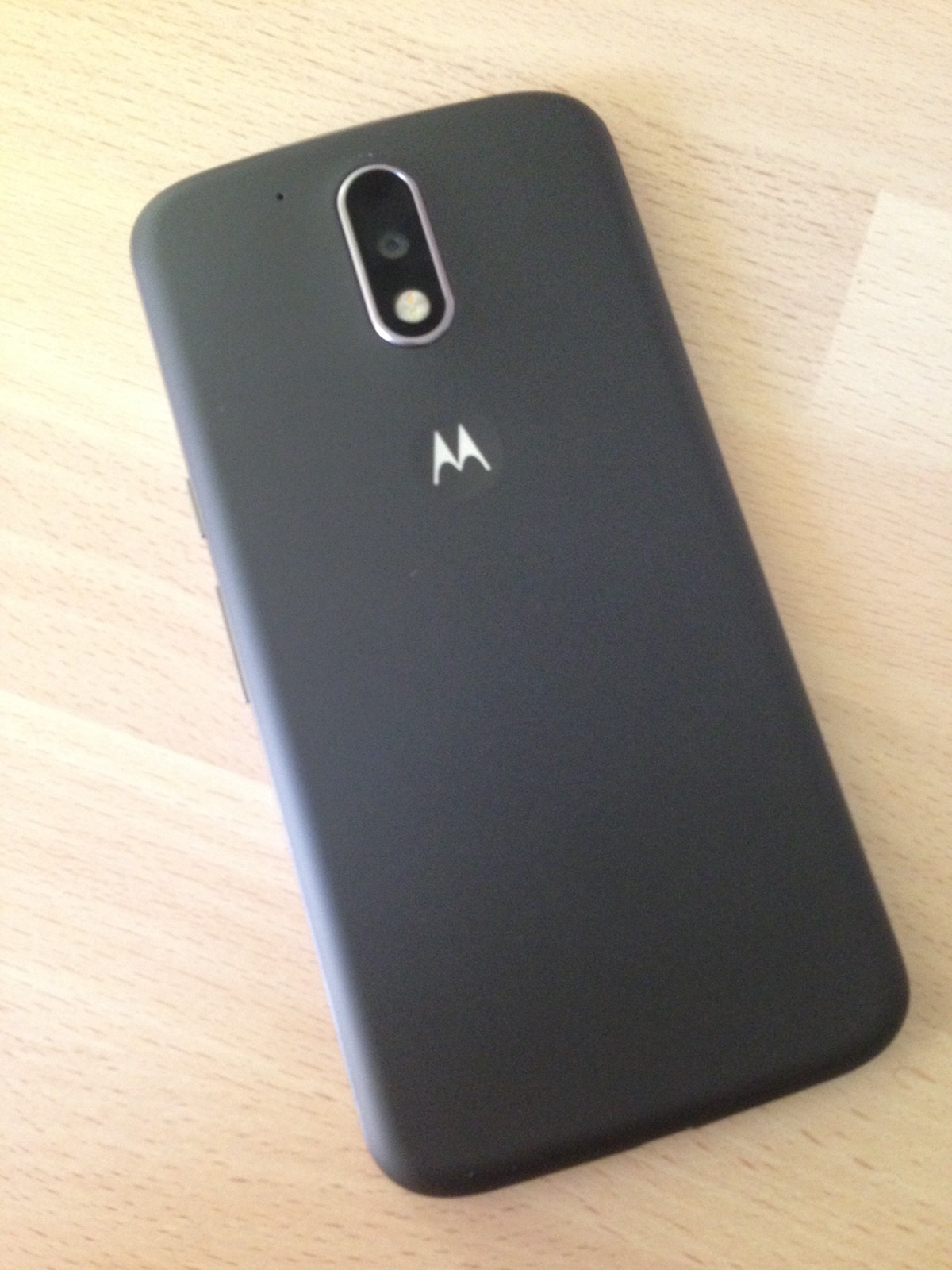
Motorola Moto G4... Why I Am Keeping Mine

In February 2017, I switched from an iPhone to Android. I bought a Motorola Moto G4 and compared to my aging iPhone, this thing screamed along. The 5.5” screen, octa-core processor and 2GB of RAM were decent specs and its £159 price tag was half that of a used iPhone.


The Moto G4 was actually released March 2016, so is now coming up for two years old. The Moto G5 was released March 2017 but with a smaller screen than its predecessor, it also benches lower so I decided not to upgrade. The Moto G6 is due to be released shortly, but unless it offers serious improvements I will be holding on to my G4 for some time yet.

Looking around at other handsets from other manufacturers in the sub £200 price bracket and I was thoroughly disappointed with what was offered. Could a two year old mid range handset like the Moto G4 really be better than what is currently being offered?

The Samsung Galaxy J3 2017 and Sony Xperia L1 both have a measly quad core processor, while the Nokia 5 and LG K10 2017 have octa core processors and all feature 2GB RAM.

All of the above feature 16GB internal storage, 13mpx rear camera and 5mpx front facing camera and have Android 7.0 Nougat. While some may have or get the 8.0 Oreo update, some may not and my Moto G4 isn’t going to get it either.

On a side note I was shocked to see low priced sub £50 Android handsets such as the ZTE Blade A110 shipping with Android 5.1.1 ‘Lollipop’ and the Alcatel OneTouch Pixi 3 3.5 even ships with Android 4.4 ‘KitKat’ an OS released in 2013.

Nothing in the same price bracket as my Moto G4 offers much if anything more than I am getting now - and considering my handset is now a two year old model, it really shows how much ‘bang for your buck’ you get from a Moto G handset.

My family all own Moto G handsets. My daughter has a Moto G, my son has a Moto G2, my other son has a Moto G3 and both my wife and I have a Moto G4. They are cracking phones offering far better specs and speed than comparably priced handsets.


Even two years on the Moto G4 is a superb handset. It has never caused me any issues, never let me down, is still super fast, does everything I need and the 3,000 mAh battery lasts forever.

The upgrade from Marshmallow to Nougat didn’t caused any slow down and is a real shame it won’t see Oreo - but having the latest version isn’t that important in the Android world.

It is by far the best handset I have ever owned, a joy to use. On the used market you can pick them up for about £70 which is an absolute bargain.

Written by Simon Royal. Follow me at twitter.com/simonroyal

Monday, 23 October 2017

Motorola Moto G3... SD Card Issues

I have become a big fan of the Motorola Moto G series of handsets, in fact there are six in my household ranging from the original Moto G from 2013 up to the Moto G4 from 2016. They are excellent quality handsets offering fantastic value for money and brilliant performance. 

However, there has been one issue which has plagued my sons Moto G3 (XT1541) for months and it regards MicroSD cards. I know MicroSD cards aren’t the most reliable but I haven’t had issues in any other handset.

The Moto G3 seems to destroy cards. They work for a few weeks at most, then experience intermittent working before not being recognised at all after which they will not be recognised in any phone or computer.


At first I thought it was an old 8GB card I was using. Then I bought some 16GB cards from eBay, the same happened and I thought perhaps they were just cheap cards. However I bought a 16GB SanDisk cards from a reputable supermarket and the same happened again.

Officially it should take up to a 32GB microSDXC.

Not only is this annoying and a loss of data but it is also becoming an expense I wish I didn’t have.

Searching around this is a common issue, but with no obvious fix. Some say the Marshmallow update caused it, some say they have it on Lollipop. Some say it is caused by using the card as internal storage but others - like myself - have it when using it as portable storage.

There are claims that it is a problem with Class 10 cards, but I have yet to test this out.

For the past three months my son has had an unbranded 2GB card in and working fine. Is this a lower Class card? Is it because of its small size? While it is promising that a card is working, 2GB is just too small.

If it is hardware related then a resolution isn’t possible, but if it is a software issue then Motorola should have listened to the very common problem and issued a fix for it.

Have you experienced this? Have you found a solution?

Written by Simon Royal. Follow me at twitter.com/simonroyal


Sunday, 22 October 2017

Moto G (2013 First Generation) ... Is It Any Good In 2017?

Motorola have always produced good hardware. In 2013, Motorola released a new range of budget, mid and high end Android smartphones. The Moto G was a mid-level handset, but how could this handset hold up almost 5 years after release, in a world where technology is so fast paced.


First of all, let us look at the specs. It has a 1.2ghz quad core 3G device with 1GB RAM, 8GB internal storage (although a 16GB model is available), 4.5” screen with rather high 329ppi, 5mpx camera with flash, 1.3mp front ‘selfie’ camera and a 2070mAh battery.

It doesn’t however feature a MicroSD slot for extra storage, although various revisions were subsequently released with the addition of 4G and a MicroSD slot. 

My son was in an urgent need for a phone recently and I picked him up a Moto G very cheap. Our entire household has newer Moto G handsets so I knew they were good, reliable, built to last and offer excellent bang for your buck.

The Moto G features similar hardware to the Moto G2 (same processor, same GPU and same RAM), but packed in to a smaller shell. It shipped with Android 4.3 ‘Jelly Bean’ and was upgraded to Android 5.1.1 ‘Lollipop’.

So how does this aging handset handle in 2017. Moto G handsets have always performed way above others in the same price bracket and this goes in their favour for longevity. 

My son has been using his for about a week and has actually fallen in love with the ‘little’ handset. The small screen size may put some off, and compared to the 5.5” on my Moto G4 this sure does seem tiny, but it is perfectly useable for every days tasks.

Besides screen size, does this phone have enough grunt to keep up. The short answer is yes. It is never going to play massive games, but the lack of SD slot for storing apps or media is going to limit the app/game collection anyway.

It is running Lollipop which runs smooth, fast and stutter free and is a joy to navigate around. Apps load and run quick. Testing average apps such as FaceBook, Messenger, Astro File Manager, Chrome and GMail all opened virtually the same time as my G4 with the G being less than a second behind. Playing Carmageddon on both, the G was a few seconds behind on loading screens, but game play was exactly the same speed and smoothness.

A side point. The G tops at Lollipop and although the G2 has almost identical hardware received Marshmallow. The G on Lollipop runs smoother than the G2 on Marshmallow.

As a phone it is as expected. Good signal strength with excellent call quality, and the 2070mAh battery even though I suspect is the original still holds up superbly and lasts just as long as newer phones. My son easily gets a day and a half out of it, which he could push to two if used lightly.

One area that struggles today is the camera quality. The 5 megapixel shooter is a touch focus and lags behinds todays 12+ megapixel beasts but in 2013 it was pretty decent, especially for a mid-range handset. The front camera is an ok 1.3 megapixel for selfies and video calling.

The lack of SD card slot could be an issue if you like storing a lot of music. One work around which works in Lollipop but is broken in Marshmallow and up is USB OTG. Plug in a USB device with music stored and you can access these in Play Music, but in Marshmallow and upwards they seemed to revoked this access to Play Music and any third party app - so are only playable file by file in the built in file manager (not even third party file managers).

It all comes down to what your needs are. But the average person doesn’t use all the modern new gimmicky features or will only use them a handful of novel times and then go back to using the same basic functions of a handset.


The Moto G despite its age is still a great handset, capable of keeping up in 2017 and capable of keeping a teenager happy. Its small size, tiny price tag - of under £30 - and amazing build quality still makes it a great choice as long as you know its limitations. 


A comparison of the Moto G1, G2, G3 and G4


Written by Simon Royal. Follow me at twitter.com/simonroyal

Saturday, 4 February 2017

Motorola Moto G - 1st gen to 4th gen in 2017

Motorola returned to the smartphone world with a storm in 2013 after Google bought their mobile side in 2012. Launching three new lines they were instantly catapulted in to the Android limelight. 

The E range is budget, the G range is mid way and the X, and later joined by the Z, are the high end. The G range stood out as a happy medium with Motorola packing some serious punch into these compared to its competitors.

I have had the opportunity to use all four handsets in the G range. In fact all four have been in our house over the past few weeks, so I am comparing them and how they perform in 2017.

All Moto G handsets follow a similar minimal look. The back has the camera and flash and trademark dimple, the top has the headphone socket, the bottom the MicroUSB socket for charging and data transfer. The right side has the power/lock button as well as the volume rocker.

Moto G (XT1032)

The original Moto G - released in 2013 - is the smallest of all, featuring a 4.5” screen and no MicroSD card slot. A heavy but well built device. The lack of MicroSD card slot is a big turn off for me as the built in 8GB is too limiting without expandability - although also available in 16GB version.


It can handle social media and YouTube videos without issues and even gaming is possible due to its quad core processor and 1GB RAM - but space will be your main concern. It shipped with Android 4.3 Jelly Bean and received 5.0 Lollipop which it runs very well. As a four year old handset it still performs very well for its intended tasks - but lacks the new look OS, which had a major visual overhaul in Marshmallow.

Later on, variants were released that included 4G and MicroSD card slots - although I have never seen any of these.

Moto G2 (XT1068)

The second generation Moto G - released in 2014 - upped the stakes, growing to a 5” screen and adding an MicroSD card slot. It has a more plastic feel, which gives it a lighter feel without making it feel cheap. 


The bigger screen, drastically improved cameras and inclusion of a MicroSD card slot put it at a huge advantage over its predecessor - despite both having the same CPU and GPU. This model was well received by the media and offered serious value for money.

It still performs superbly today, running Android 6.0 Marshmallow (shipping with 4.4.4 KitKat) and easily keeps up with other newer handsets on the market. My daughter has this model and she uses it for light gaming, messaging and music with no issues. It really is a joy to use and doesn't feel like a three year old phone. The battery is easily as good as new phones and she can stretch hers for days. An interesting bonus too is that the G2 has stereo front speakers - producing superb sound for a phone (as far as I know, the only version of the G range to feature them). Later on, a variant, the XT1072, with 4G support was released.

Moto G3 (XT1541)

The third generation Moto G - released in 2015 - took the same design and tweaked it slightly. The back is the big give away featuring a textured back casing for easier grip. The cameras were upped once again offering a very capable 13mpx rear camera offering 1080p videos (over the 720p of previous G handsets) and dual LED flash, the front camera is taken to 5mpx. A slightly better CPU and GPU were introduced and it also added 4G/LTE in all models.


However the performance difference between the second generation and third generation is barely noticeable. My son has the third generation and he loves it. He plays a lot of games and never once complains about speed or delays, the only issue he has is the 8GB internal storage which can limit your apps even though Marshmallow introduced combined storage for internal and SD, it doesn’t work just as it should. There is was a 16GB model which had 2GB of RAM but I am not sure if it was released in the UK. (Editors note: the 16GB/2GB variant only seems to have been sold on Amazon UK, and I too have never seen one in the wild).

The battery size was increased by over 20%, which makes an already decent battery life even better and it features IPX7 water resistance which means it can be submerged in water - although I have never wanted to test it. 

One final addition over its older brother is the ability to wake the phone just by picking it up. Motion triggers the screen to wake, which is a handy feature.

Moto G4 (XT1622)

The fourth generation Moto G - released in 2016 - makes further leaps over the previous version, upping the screen even further to 5.5” (1080P instead of 720P in the previous generations) and cramming in impressive Octa Core processors, 2GB RAM but did keep the same camera specs as the G3. The device is splash-proof rather than water resistant like the G3 had been. 


My wife recently picked up a G4. The performance gain in the new specifications are fantastic. This handset flies and for something in the mid-range market and price range gives even top end handsets twice its price a run for their money.

I was a little dubious about the 5.5” display - especially as both my wife and I had phones with 4” screens - but the phone is large but not uncomfortable in the hand, and the huge display makes reading web sites and playing games great. The larger display is now 1080 - upped from the 720 of previous devices.

It packs in a whopping 3000mAh battery which sees my wife through nearly two days of average use. It ships with Android 6.0 Marshmallow - but is due for the 7.0 Nougat update shortly.

It is also the first Moto G handset to be produced under Lenovo, after acquiring the mobile side from Google.

Moto G5
Due for release in March 2017, the specs are not yet known for the Moto G5, however rumours are it will feature a 5.5" screen and Octa-Core 2Ghz and 3GB RAM.

Conclusion

The whole Moto G range has blown me away and my dismissive attitude towards Android handsets have changed considerably. All four released handsets offer so much power for so little money, it is hard to see why most people would need anything more expensive or powerful.

For the budget conscious the Moto G2 is a great bargain - however it lacks 4G. The Moto G3 is a little more expensive but does have better camera, slightly better processor and 4G.

The Moto G4 is still new and commands a much bigger price tag - but worth it. The original Moto is still good but its cameras are poor and lack of MicroSD card slot might cause space issues.

For me the G2 is the sweet spot between features and price.

Find below a comparison summary of the four models.

Moto G: Nov 2013, Quad Core 1.2Ghz, 1GB RAM, 4.5” screen, 8/16GB internal, 
no SD slot, 5mpx cam, 1.3mpx front cam, 2070mAh battery and Lollipop.

Moto G 2: Sept 2014, Quad Core 1.2Ghz, 1GB RAM, 5” screen, 8GB internal, 
SD slot, 8mpx cam, 2mpx front cam, 2070mAh battery and Marshmallow.

Moto G 3: July 2015, Quad Core 1.4Ghz, 1GB RAM, 5” screen, 8/16GB internal, 
SD slot, 13mpx cam, 5mpx front cam, 2470mAh battery and Marshmallow.

Moto G 4: May 2016, Octa Core 1.4/1.2Ghz, 2GB RAM, 5.5” screen, 16/32GB internal, 
SD slot, 13mpx cam, 5mpx front cam, 3000mAh battery and Nougat.

Written by Simon Royal. Follow me at twitter.com/simonroyal

Saturday, 28 January 2017

Motorola Moto G : 4th Generation Review

I’ve been an iPhone user for many years, but when my kids wanted decent smartphones we looked around and was pointed in the direction of Motorola - not a name synonymous with decent phones these days. However the last few years their Moto range has taken the Android world by storm.

I bought my son a Moto G third generation last year and it blew me away. My daughter then got a Moto G second generation and we were just as impressed.. These might be mid range handsets, but they offer serious power that can even rival high end handsets.

So when my wife wanted to switch from iPhone - there was only one manufacturer to look at, Motorola. She opted for the Moto G fourth generation.

Unboxing revealed an amazing looking handset. For a handset that can be bought for £150 brand new SIM free you get a lot of hardware. While the G3 wasn’t a massive leap over the G2, the G4 is a huge improvement over its predecessor. 

The G4 packs in a 5.5” screen, Octa-Core processor, 2GB RAM and 16GB built-in storage with an SD slot. Compare this to the G3 with it’s 5” screen, Quad-Core processor, 1GB RAM and 8GB built in storage and it is easy to see the improvements the G4 has.

Build
They might be plastic, but Motorola make good solid handsets. The G4 is no exception. It feels strong and sturdy. Its removable back does seem a little flimsy, peeling it off I had a brief worry it would break. The back has a rubbery feel which great for grip.


It is a large phone - especially when you are used to an iPhone 5 or SE with their 4” screen - but the handset fits neatly in the hand. It is thinner than previous models and despite its size feels like it weighs less, although officially both weigh 155g.

The back features the camera, flash and the Moto dimple. The bottom features the MicroUSB port for charging, and connecting to a computer, and the right side has the power/lock button which has a textured feel and also the volume rocker. The top has the headphone socket.

Screen
The 5.5” screen is superb. It is large and very bright and the 401ppi makes it very crisp. Colours look vibrant and viewing angles are great. One thing I have found on all Moto is the screen is very sensitive to touch, which takes a little getting used to.


Cameras
The G4 has the same 13MP camera and 5MP front camera as its predecessor although the front camera now features a ‘selfie flash’ mode similar to the Galaxy S7 and iPhone SE. It shows a white screen illuminating your face in low light.


Back camera: outdoor shots


Front camera: outdoor shot and indoor shot


Back camera: indoor shot

Call/Music
It is a phone primarily, so call quality is important. This handset has the clearest and loudest call quality I have ever experienced on a phone. I live in a poor signal area and still had no issues even indoors.

Music playback was also as good as you get on a phone. I’m not a fan of banging out choons on a tiny phone speaker - no matter what the manufacturer claims - but it performed decently and when hooked to a Bluetooth speaker it was superb. Listening over headphones also produced very loud sound - something I like from a phone.

Performance
This handset is no slouch. Everything is a dream to use on it. Surfing the web, Facebook, Twitter, listening to music, gaming and even navigating the OS, this Moto is amazingly fast.

It’s large screen makes viewing web sites, browsing social media, watching YouTube videos and looking at your camera roll a superb experience.

Battery
It packs in a 3000mAh non-removable battery. Out of the box it was almost fully charged and setting it up, performing the 6.0.1 update and installing her apps made no dent in the battery. The following day, she continued to play with it, made calls and listen to music connected to a bluetooth speaker and by 10pm it still had over 70% battery left. That is very impressive.

OS
As with other Moto handsets, Motorola offer a nearly vanilla Android experience with a few Motorola apps thrown in. It shipped with 6.0 Marshmallow and is due 7.0 Nougat in the near future. The Android world generally falls short of the massive four year of updates you get in the Apple world - however you are talking about a phone that is a quarter of the price.

Conclusion
I was already seriously impressed with the Moto G range - and this large, elegant G4 has seriously turned my head. I can’t fault it in any way.

My ageing iPhone is in need of updating and for the first time I am seriously swaying away from iPhone.

Written by Simon Royal. Follow me at twitter.com/simonroyal

Monday, 12 December 2016

Secondhand Smartphone Upgrade: From 2014 Moto X to 2015 Moto X Play

Just recently I decided I could do with an upgrade from my 2014 Moto X, one that has or will receive Android Nougat, as the 2014 X will not get it due to the age of the CPU. I was considering a Motorola Nexus 6 but it is still a bit out of my budget, but then I spotted a Moto X Play XT1562 at a great price, unlocked and boxed with it's original charger, so I took the plunge and traded up.


First impressions are the 5.5 inch 1080P IPS screen is great, though not quite as black as the AMOLED 5.2 inch screen on the 2014 X. I mainly notice this with Active Display, when it wakes to show the clock when picking it up (it uses the accelerator to detect movement) or when shows a notification. It also does not have the 'wave to wake' feature where you can wake it by waving your hand over the screen, as if you were a Jedi, which is a shame but not a deal breaker. There's no gyro, compass or temperature sensor which is slightly baffling considering the previous model had them.


On the backside of my device is a nice replaceable rubberised back cover which stops it from slipping out your hand, which is handy on such a big heavy device. I loved the old real walnut back on my old X but this rubberised back is more practical, particularly if you do not intend to use a case. It feels a bit heavier than either my old X or my LG G3 but kind of in a reassuring way, it doesn't feel unbalanced. Underneath is a huge non-removable 3630mAh battery. Well it is huge compared with the puny 2300mAh battery in my old X! The SIM/SD card tray is at the top of the device the same as the older X. The usual volume and power buttons are on the right hand side.  


After restoring all my apps during the setup process, which Marshmallow (and above) makes pretty simple now, I setup Nova Launcher with knock to lock and made it look even more stock than it's default launcher. The weather widget is Moto's ripped from the Moto Z and can be downloaded here. The mostly stock Android, that is usual with Moto devices, is buttery smooth on this device, significantly so from my old X, most likely down to the octa-core (4x1.7 GHz Cortex-A53 & 4x1.0 GHz Cortex-A53) CPUs inside, compared to the quad-core 2.5 GHz Krait 400 in the old X.

Camera

The rear camera is very impressive, at 21MP, and does not feel like they threw more pixels at an 8MP device like the Sony Z2 I had. The front camera has 5MP, which is also an improvement over the 2MP on the previous X. One feature I really like is you can get straight into the camera from the lock screen by quickly pressing the power button twice (it vibrates in conformation) or you can quickly twist the device side to side like the old X, which I found took some practice to get right and was slower in practice. Volume down button acts as a shutter button, if you prefer that to tapping the screen, and holding it enables burst mode. The default camera app is a slightly improved, you can manually control the exposure, which I don't remember being there previously. I also noticed that you can use slo-mo on the 'selfie' camera too, unlike on the old X. There used to be a halo effect around the edges of buildings with HDR shots, there's none of that with this device. My only real criticism camera-wise is lack of Photosphere mode in Google Camera due to the lack of a gyro. It takes decent sharp detailed images all the way to edges but I'll let you judge from some photos I took using the stock camera app:

Fairly low light during sunrise:


Misty morning:


Panorama:


I think a user could probably get even better images using third party cameras, particularly to replace the slightly sub-par panorama mode. The Play takes fairly decent 1080P videos, probably about the same or slightly better than my old X. I am surprised it lacks the 2K video recording in the older X, though I never really used it due to the amount of space the recordings take up and the slo-mo recordings are lower in quality too. I have collated a selection of my recent photos using the X Play in an album here.

Battery

The battery life with the 3630mAh battery on the Play is amazing, particularly compared with the older Moto X, I'm usually getting about a day and a half of battery life, and nearly 5 hours screen on time! With particularly high camera usage one time, it dipped to about 3 hours screen-on time. I take a lot of photos, browse the net a lot, and use Hangouts and Facebook Messenger, though I don't play any games.

Conclusion

The Moto X Play feels like it was created for media lovers, with it's huge battery and excellent 21MP/5MP cameras (which is only let down by the lack of a gyro) and MicroSD slot. The near-stock Marshmallow 6.0.1 OS is buttery smooth on the device and it is officially scheduled to receive Nougat sometime early next year. I also really like the 5.5 inch screen which feels large compared with the 5.2 inch of the old X, but the device still manageable in my hands, particularly with the nice rubberised back. It is worth also considering the Moto X Style (which has a gyro and bigger higher resolution screen, but a slightly smaller battery) and also the Nexus 6, but they are still a bit more costly secondhand compared with the Play. So overall, I am very pleased with the X Play so far, it suits my usage well. I consider it the best Android phone I have had so far, having previously owned the 2014 Moto X, Sony Z2, LG G3, Moto G (1st and 2nd gen), Nexus 5, Samsung Galaxy S3, Motorola Atrix 4G and HTC Hero. It is also the youngest device I have had being only just over a year old. Hopefully it will be even better under Nougat when that arrives in the new year, I shall update this review then.  

Update 15/01/2017: Motorola has confirmed that the EU version of the Moto X Play will get the Nougat update by the end of January.


Good:

  • Excellent battery life
  • Great cameras (21MP and 5MP)
  • Splash and dust resistant
  • Micro SD slot
  • Fast charging
  • Upcoming Nougat update
Bad:

  • No gyro or compass sensor.
  • No 2K video recording.


Wednesday, 31 August 2016

Motorola Moto G - 2nd Generation vs 3rd Generation

A few weeks back I bought my son a Motorola Moto G 3rd generation and for what is, a mid-range handset, I have been seriously impressed with it.

So when looking for a phone for my daughter I instantly looked at the Moto range. A faulty Moto E had to be returned, and finally I settled on a Moto G 2nd generation.

The Moto G range are Motorola's mid range phones sandwiched between the budget Moto E and the top end Moto X, so you don’t expect premium performance - but the Moto G are decent performers and are reasonably priced. You get serious bang-for-your-buck.

Specs

The 2nd gen was released in September 2014, less than a year later the 3rd gen was released. The 2nd gen is slightly smaller, thinner and lighter than its successor. They both feature a similar body shell, 5.0” IPS LCD screen with 294 ppi and Corning Gorilla Glass 3, 1GB RAM. The 3rd gen adds IPX7 certified - it is water resistant up to 1 meter and 30 minutes.

The 3rd gen is available in 8GB model which has 1GB RAM - which my sons is - as well as 16GB model which has 2GB RAM.


Where the two differ are marginal. The quad-core 1.2Ghz processor in the 2nd gen is upped to a beefier 1.4Ghz. The GPU has been upped slightly too. The cameras go from a 8 megapixel main with LED flash capable of 720p videos and 2 megapixel front, to a 13 megapixel main with dual LED flash capable of 1080p videos and 5 megapixel front. 


Mobile Network

My 2nd gen is a XT1068 model which has no 4G, whereas later ones did. The 3rd gen however does have 4G.

Android Version

The 2nd gen shipped with Android ‘Kit Kat’ but is upgradeable to ‘Lollipop’ and ‘Marshmallow’, whereas the 3rd gen shipped with ‘Lollipop’ and upgradeable to ‘Marshmallow’ with a possibility it will received ‘Nougat’.

Battery

Both feature built in non-removable batteries, but the 3rd gen increases capacity by about 20%.

Performance

I ran both side by side. Both are running Marshmallow and there really is a negligible difference. Apps and games ran pretty much the same, with only a second or two between them and not always in the 3rd gens favour.

Pokemon Go and Facebook - two rather heavy apps for any device ran the same on both. Opening Chrome and loading pages over WiFi there was no difference.

Cameras

The cameras on both handset are very impressive. The 8 megapixel camera on the 2nd gen produce crisp, sharp and well balanced pictures and the increased 13 megapixel on the 3rd gen do just as well.

Front cameras aren’t for much more than taking selfies or video calls. The 2 megapixel on the 2nd gen produced decent images and the upped 5 megapixel on the 3rd gen were even better.

Call and Audio Quality

Both handsets were great for calls, producing clear and very loud calls. Music playing on both were as good as you get from any phone. Personally I don’t like music blasting out from a small plastic device - couple it with a Bluetooth speaker or a pair of decent earphones and I am much happier.

Conclusion


My kids are happy with both handsets. There isn’t much difference between the two. The 3rd gen has slightly higher specs, improved camera, water resistance and a possibility of receiving Android ‘Nougat’.

Both handsets are decent performers.

Written by Simon Royal. Follow me at twitter.com/simonroyal

Tuesday, 26 July 2016

Motorola Moto G : 3rd Generation With Marshmallow Review

When looking for a new phone for my son I was at a loss where to start. His Windows Phone had served him well, but the lack of apps were getting to him. So I asked around and the new range of Moto phones were recommended.

The Moto E is Motorola's budget Android handset and the Moto X their flagship phone. In the middle is the Moto G. After comparing specs, I decided to hunt for a Moto G and stumbled across a phone listed badly on eBay. It was marked as first generation, released in late 2013, however it was clear by the pictures it was a third generation released in mid 2015.

I won the auction and it arrived next day and I was correct - I opened the box and was presented with a third generation Moto G. It was in great condition with a few scratches on the screen - only visible when turned on.

Set Up

I went about setting it up for my son, and it gave me a good chance to check it out and give it the once over.

Specs

The specs are impressive for the price. A Quad Core 1.4Ghz processor and 1GB RAM. It has a 5.0” screen, 13 megapixel camera main camera and 5 megapixel front camera. It is also running 6.0 Marshmallow - the current latest version of Android.

Check out the full specs at GSM Arena.

Build 

It has a great feel and build quality. The back is held on tightly and once clipped is water resistant. Its textured back makes it easy to hold, giving a good feel in the hand. With its 5” screen it makes it a large phone, but it doesn’t feel bulky. 


Screen

Turning it on you are greeted with a large bright screen, which was viewable in all lights, even direct sunlight. Setting up was as easy as any other Android device. Once set up you sit looking at a near stock Android Marshmallow OS.


Cameras

Next I took a look at the cameras. The 13mpx rear camera is amazing for the price. Crystal clear pictures that snapped instantly and it features dual LED flash. There is no camera button, but pictures are snapped by pressing the screen. Even the front facing camera produced superb images at 5mpx.


Out door photos taken using the rear camera.


In door photo taken using the front camera.


Selfies taken with the front camera. Left is outdoors. Right is indoors.

Online

Using it as an internet device was great. Its large 5.0” bright screen made it a joy to use. Connected to my home wifi pages loaded very quickly and Facebook and YouTube were very quick. I briefly used it over 3G and it also performed very well.

Phone

It is a phone after all. So how did it perform as a telecommunications device. I live in quite a poor signal area, yet this Moto G had no issues holding on to signal even indoors. Outside it held on to a high speed internet connection very well.

Call quality was superb. I could hear the caller very loudly and the caller had no problems hearing me.

Music

Playing music was great. I am not a fan of playing music directly on a phone as no matter what handset you have it is still quite a horrible experience. The Moto G had decent volume and OK sound output - but please, use earphones or hook it to a decent speaker/sound system.

OS / Speed

Navigating around the phone you realise what a decent piece of kit it is. It is extremely fast, loading built in apps and the Play Store was very smooth. I then started installing a few regular apps such as Facebook, Facebook Messenger, Pokemon Go and GeekBench. As well as this it was updating built in apps and preparing the SD card. Nothing seemed to phase it.

Once finished loading apps, it was still very quick. Facebook - a usual slug of an app - loaded within seconds and refreshed just as quick. Even Pokemon Go, which can be slow, loaded quickly.

I am very pleased and surprised by how this year old mid range handset performed.

Battery

I haven’t had the chance to play with it for a full day - but heavy usage of setting it up, installing apps and giving the phone a good play didn’t impact much on the large 2470mAh battery.

Mac Connectivity

I don’t have a lot to do with Android as I own a Mac and went for an iPhone for ultimate compatibility. Windows Phone had a good app which tied in with iTunes playlists meaning syncing music was quite easy. This broke with the release of Yosemite, however a small hack got it working again.

For Android it seems hit and miss. Older Androids used to just mount as an external drive and copying to and from was easy. However some newer ones require the Android File Transfer tool which is terrible.

This Moto G uses Android File Transfer and I didn’t like it. Copying music over was slow and it would fail part way through. It took a few attempts to get everything copied over. I shall be looking in to an alternative.

It also appears that when selecting which USB connection you want you have to decide between ‘file transfer’ which does music and ‘photo transfer’ which loaded Photos on my Mac. It seems you have to do things separately. (Editors note: photos are kept in the DCIM folder)

Update To N

The Moto G 3rd generation shipped with Lollipop and received the update to Marshmallow. My sons came with Marshmallow already. Whether it will see Nougat - due for release late 2016 - is a good question. Will a mid range 2015 handset get a third update? We will have to wait and see.

Conclusion

Personally I love my iPhone and iOS - but I have had my head turned by this Moto G 3rd generation. A mid range handset that was under £200 on release and can now be purchased for about £120 new - or less on the used market - it packs a lot of quality punch for a low price range.

It is an incredible handset at an incredible price and you really do get a great quality phone that out does some high end handsets.

Written by Simon Royal. Follow me at twitter.com/simonroyal